Selling food through TikTok, Instagram or DMs feels casual. But the law isn’t.
In England, Wales, and Northern Ireland, anyone preparing, storing, or selling food must register with their local authority at least 28 days before trading. (In Scotland, the process is similar but run by Food Standards Scotland.)
So what’s the problem? Well, on most social platforms, this duty isn’t highlighted at the moment a seller turns on the checkout. And so many well-meaning side-hustlers start trading unregistered, opening themselves up for trouble.
In this post we outline the legal requirements for food business registration. And why social sellers are slipping through the net. We shine a light on a solution that could be introduced to close the registration gap.
Table of Contents
A subscription snack box… and a blind spot
A few summers before the pandemic, a friend told me that her young adult children had launched a “healthy snacks” subscription whilst at university. In this side hustle, they shipped pre-packed fruit and nut mixes monthly by selling on social media. When I asked whether they had registered with the local authority, there was a pause… then surprise. Even with ex-Customs & Excise parents, the legal basics weren’t on their radar. It wasn’t bad intent—just an invisible rule as this home-based business went live.
Why “registration blindness” happens
So why do people miss the step of registering their food business? Let’s go through some of the root causes:
🔷 Lack of Awareness: For a lot of first-time sellers, it feels like “just a few boxes on Insta” rather than running a proper food business.
If you’re running a food business from home—what’s often called a home-based dark kitchen—you face some of the food safety compliance challenges that commercially rented ghost kitchen experience. Read our post: Dark Kitchen Food Safety Compliance 2025.
🔷 Platform design: Selling online is too easy—frictionless listing, DMs, and no legal prompt at that crucial first sale.
🔷 Perceived risk: Myths about food hygiene inspections and costs may put some people off registering (For the record: registration is free.)
🔷 Ephemeral selling: Stories and live streams make the whole thing feel temporary, so social sellers often don’t think the rules apply to them.
🔷 Technology is evolving at a massive pace: Social media and online payment tools make it easier than ever for anyone to start selling food from home—often with just a few clicks. But these same tools can leave sellers (and buyers) in the dark about legal food safety rules.
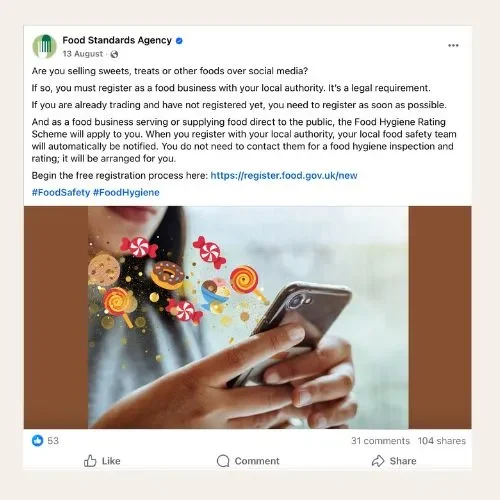
🔷 Real-world confusion: On a recent Facebook post the Food Standards Agency was raising awareness of the requirement to register. There were 31 comments and 104 shares, with a lot of basic questions and misconceptions. People were unsure whether they had to wait for their inspection before trading; some called sweets “low risk” yet overlooked allergens; some said it’s “too easy to trade from a bedroom.” This is a live snapshot of registration blindness—most sellers simply don’t see the rule when it matters.
What UK food law requires
The legal requirement is very clear: if you prepare, store, or sell food in the UK, you must register with your local authority at least 28 days before you start trading. This includes home kitchens, Instagram or TikTok sellers, and subscription boxes.
But because most social platforms don’t highlight this duty when you set up the checkout, many people start selling. They don’t realise they’ve broken the law.
We saw the risks first-hand in June–July 2025, when a BBC investigation revealed TikTok Shop listings going live without the right ingredient or allergen information. The flagged listings were taken down quickly —but it proves how easy it is for non-compliant food products to appear on social platforms.
The enforcement problem for local authorities
For local authorities and Environmental Health teams, preventing unregistered food sellers on social media isn’t as easy as it might sound. Here are some of the challenges they face:
📍Discovery:
Unregistered sellers can pop up anywhere on fast-moving platforms like Instagram or TikTok. New accounts appear every day, making it a constant game of catch-up for councils trying to spot who’s actually running a business.
📍 Attribution:
Even if a seller is identified, linking their social media handle to a real person or premises is another hurdle—especially if they use PO boxes, dropshipping, or never share a physical address online.
📍 Jurisdiction:
Sellers often post or deliver across local authority borders. This creates confusion over which council is responsible for any investigation or follow-up.
📍 Prioritisation:
Because these sellers never register, they don’t show up in risk profiles and often go unnoticed by food safety teams—meaning they’re unlikely to get a routine inspection.
📍 Evidence:
Social media content moves fast. Stories and Lives vanish in 24 hours, so it’s hard for councils to capture and keep evidence when something goes wrong.
📍 Resource constraints:
Chasing down hidden sellers takes up valuable time—often at the expense of higher-risk work, especially when teams are already stretched thin.
What this means for consumers
For consumers, purchasing food online from social media platforms exposes them to safety risks which should cause concern:
❌ There may be no initial food hygiene inspection. So no assurance of the seller’s food safety standards.
❌ Allergen information may be missing or unclear. This exposes those who suffer from hypersensitivity to extreme risk.
❌ Traceability and recalls may become impossible. So if something goes wrong (like with “suitcase imports” or ghost suppliers) it will be harder to protect public safety.
How to close the registration gap?
So, what would actually help to close the registration gap?
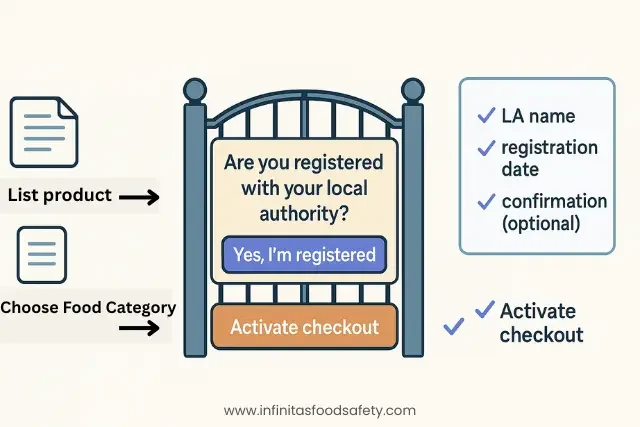
One simple option would be to provide a pre-checkout “gate” —a friendly, mandatory screen at the checkout. With a message that pops up before a seller can take payment for food online asking: “Are you registered with your local authority?”
Here’s how it currently works:
Right now, most social platforms inform sellers in their Terms & Conditions. This doesn’t actually stop anyone from listing food if they haven’t registered.
By contrast, delivery apps like Deliveroo and Just Eat do have food safety compliance checks in place before new sellers go live. This includes confirming details of registration. The business is also likely to receive a third-party consultant’s visit (such as NSF). These checks pick up compliance problems before being permitted to trade.
Our proposal for social sellers: Add a small prompt before the checkout process is set up. If your business is registered, add your Local Authority registration number and date of registration. If your business is not registered, you get directed to the official form. Checkout isn’t permitted until you provide the necessary evidence.
This little nudge does three things:
Reminds the business owner of the legal duty to register at the right moment
Prevents accidental non-compliance, and
Creates a record of the seller’s declaration.
No extra red tape—just makes the existing rule visible when it really matters.
How would a “gate” work in practice?
On platforms like TikTok Shop—or if Instagram ever rolls out its own full food checkout—a gate could be built right into the process. The notification would appear just before a seller connects their payment method or activates the checkout. Think of it like the screen that pops up when you connect Stripe to Teachable to sell a course. You can’t take payment until you’ve ticked all the right boxes.
But here’s the catch: right now, most food sales on TikTok and Instagram still happen through DMs or external links (like PayPal, Stripe, or Google Forms), with no platform-controlled cart. That’s why so many sellers have slipped through unseen—and why this registration compliance gap exists in the first place. Until social platforms add a built-in checkout for selling food, a gate would be easy to enforce on platforms like TikTok Shop.
How councils and platforms can collaborate
This problem is complex and cannot be fixed by working in silos. But platforms and local authorities can make practical changes to make it easier to ensure compliance for sellers by:
Data Sharing: Platforms could share a monthly list of food sellers in each area with local authorities.
Fast-Track Advice: Set up automatic emails with local authority contact links and starter checklists.
Education Assets: Add simple “Start Right” modules about registration, allergens, and distance selling basics.
Test Purchases: Agree signals for when councils should follow up on social sellers refusing or dodging registration.
What sellers should do today
🔷 Register your food business for free at: register.food.gov.uk — choose your local authority and submit the registration form 28 days before trading.
🔷 Keep your registration details: Make a note of your registration date and which local authority you registered with.
🔷 Check out the Food Standards Agency guidance: Read up on getting started selling online and distance selling.
Why this is the right “light-touch” intervention
Registration of a food business is already law in the UK. The gate simply surfaces it at the right moment to stop social sellers slipping through the registration crack.
Providing a gate at the checkout is a low cost option for platforms, but it would make a big difference for risk, reputation, and public safety.
Aligns with the wider policy push for clear transparent platform responsibilities in product/food safety (and mirrors what delivery platforms already do in spirit).
Conclusion
It’s time for everyone to play their part.
Platforms — If you run a platform consider adding a simple “Are you registered?” prompt (to act as a nudge) before sellers are permitted to go live with a check-out cart. And share those registration details with local authorities.
Sellers — don’t skip the basics. Registering is free, it’s required by law, and it means you can trade with confidence, knowing you’re on the right side of the rules. Being compliant with food safety regulations will protect your business and your reputation.
Marketing: Use your hygiene rating in your marketing tactics to attract more customers and give your business an advantage over competitors. The information shared is transferrable to on-line and home-based businesses.
Local Councils — make life easier for new businesses: publish clear, practical guidance on how to register, with bite-sized videos, and keep those links front and centre on social platforms.
Together, we can close the registration compliance gap—and make food sold online safer for everyone.
Frequently Asked Questions (FAQs)
❓How much does it cost to register a food business in the UK?
There is no cost to register a food business in the UK. It is free.
❓Can you sell food online without a license?
You do not need a licence to sell food online in the UK. What you must do is register your food business with your local council Environmental Health Department. You must do this at least 28 days before you start trading.
Registration is free and applies whether you’re selling from home, a shop, or online (including via Instagram, Facebook, Tik-Tok, Amazon or your own website).
If you plan to sell alcohol online, you do need an alcohol licence. Some situations may require approval, but for homemade bakes and sweets, registration is enough.
It’s important to understand that registration is not the same as having a licence. Registration is a legal requirement so the local authority knows you exist and can inspect you.
❓How to find out if a food business is registered?
You can check if a business is registered by searching to see if it is listed on the Food Standard Agency’s website.
If you think a food business may not be registered, you can report it to the local authority’s food safety team where the business is located.
To do this, click on the link and enter the full UK postcode for 👉 the food business you wish to report, for example, CF27 8LK. Then email the food safety team to report the business.
❓What happens if I do not register before selling food online?
You will be committing an offence.
If you are found guilty of running a food business online without registering with the local council you may be fined or imprisoned for up to 2 years or both.
Don’t start off on the wrong foot. It will negatively affect your reputation and your food hygiene rating.
